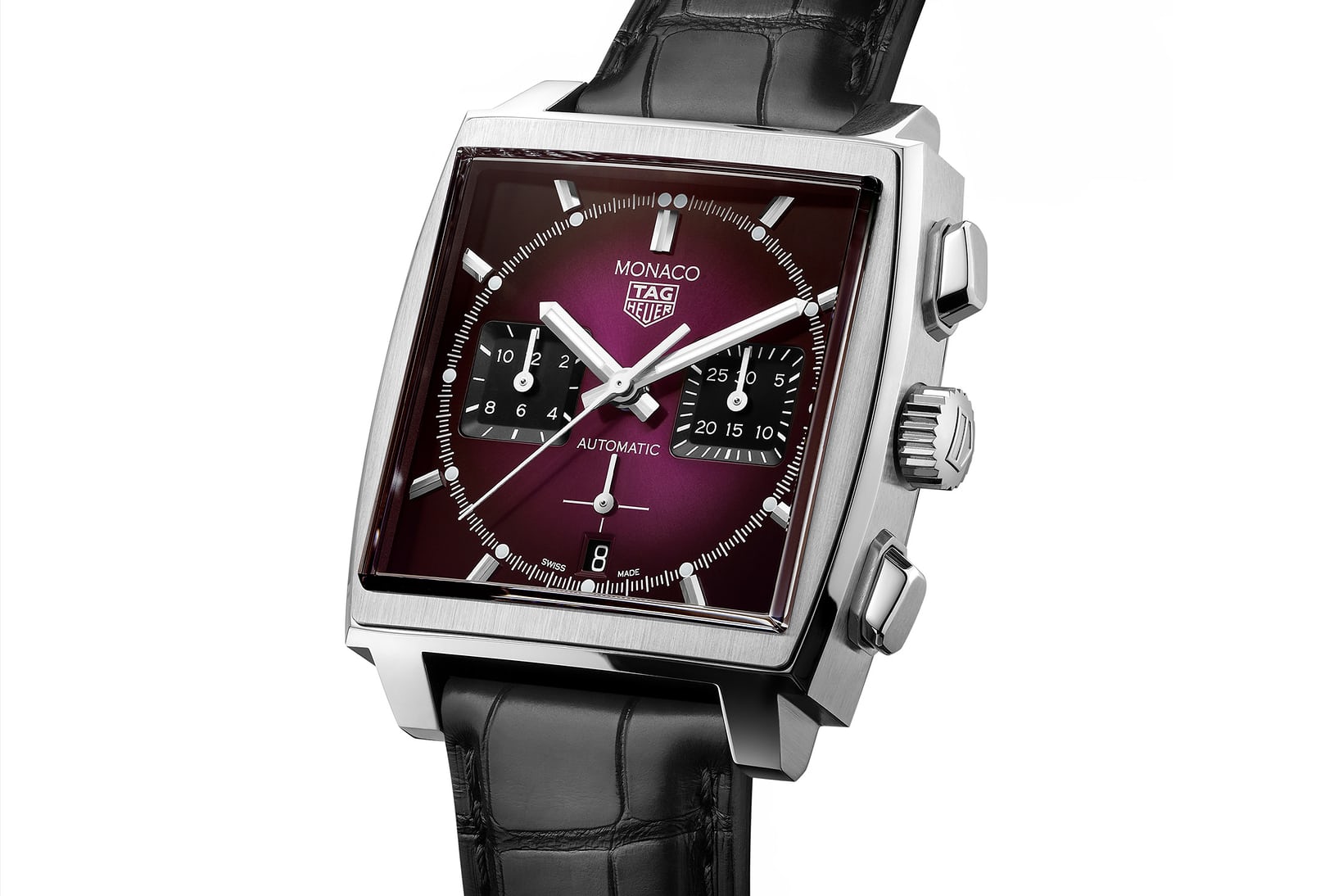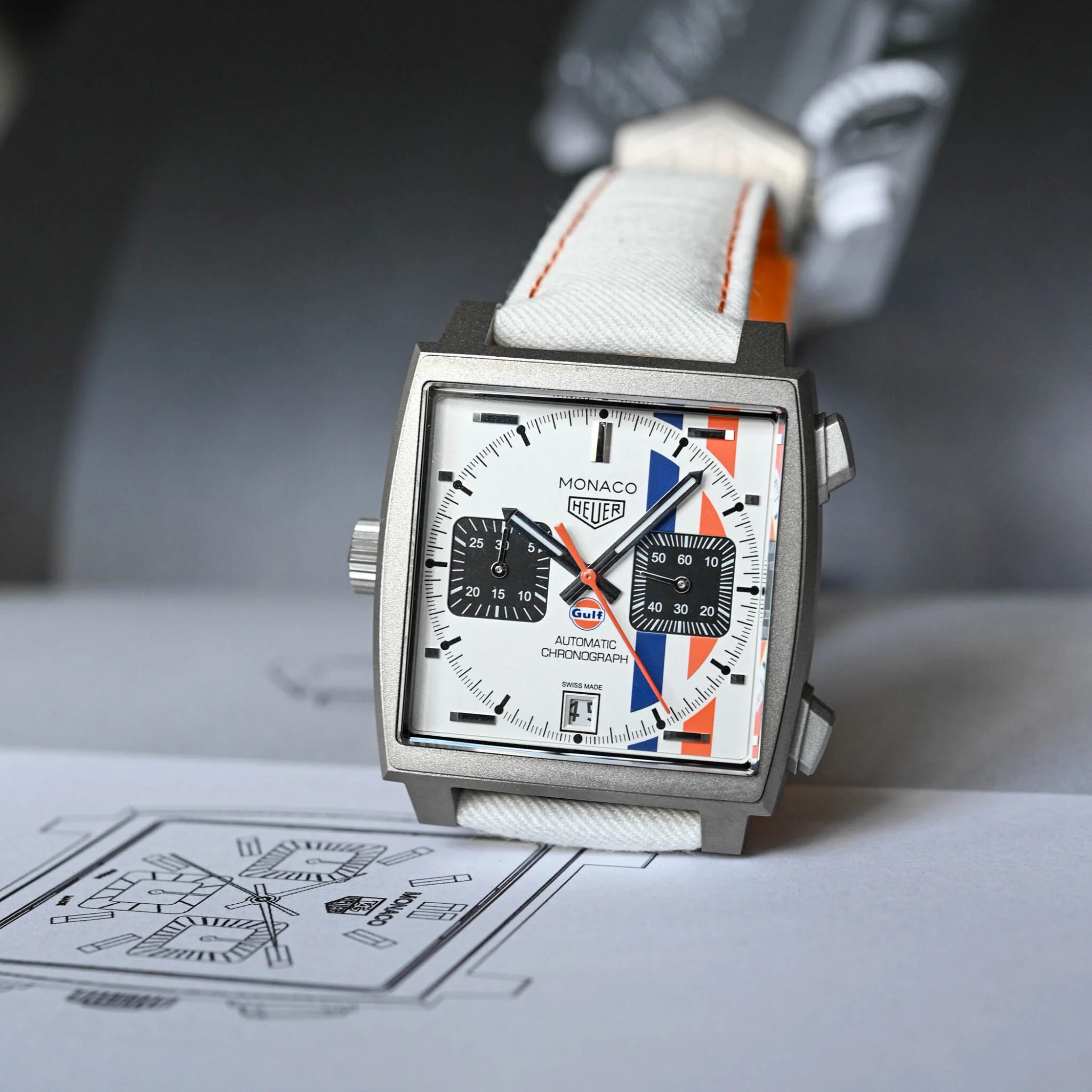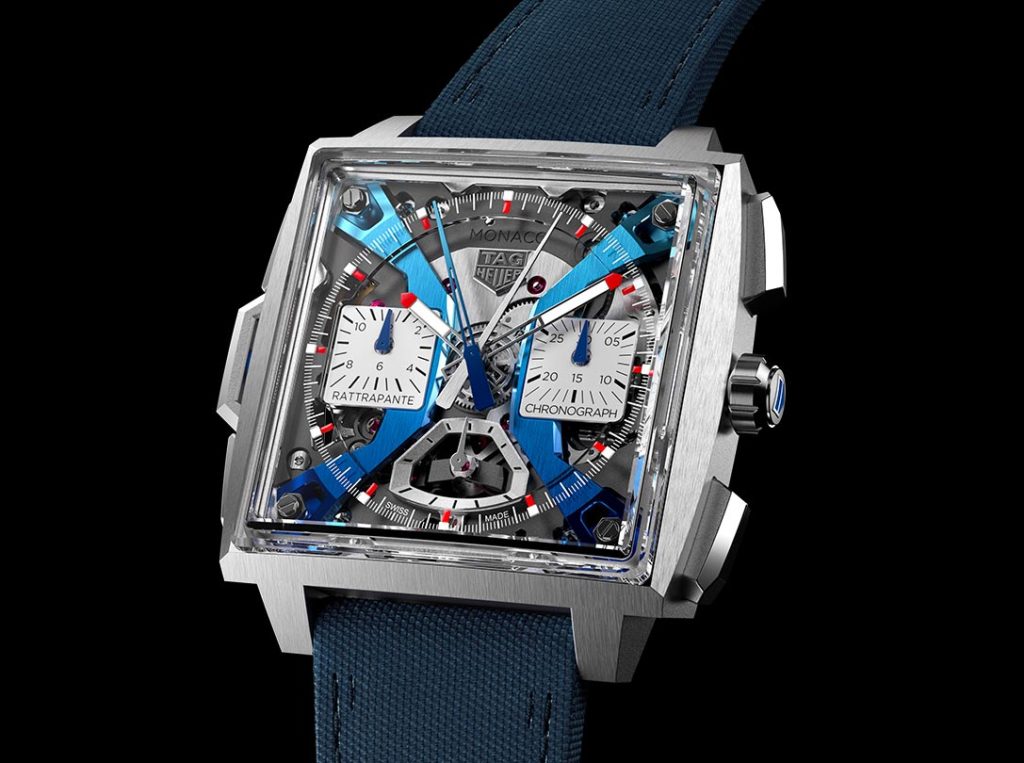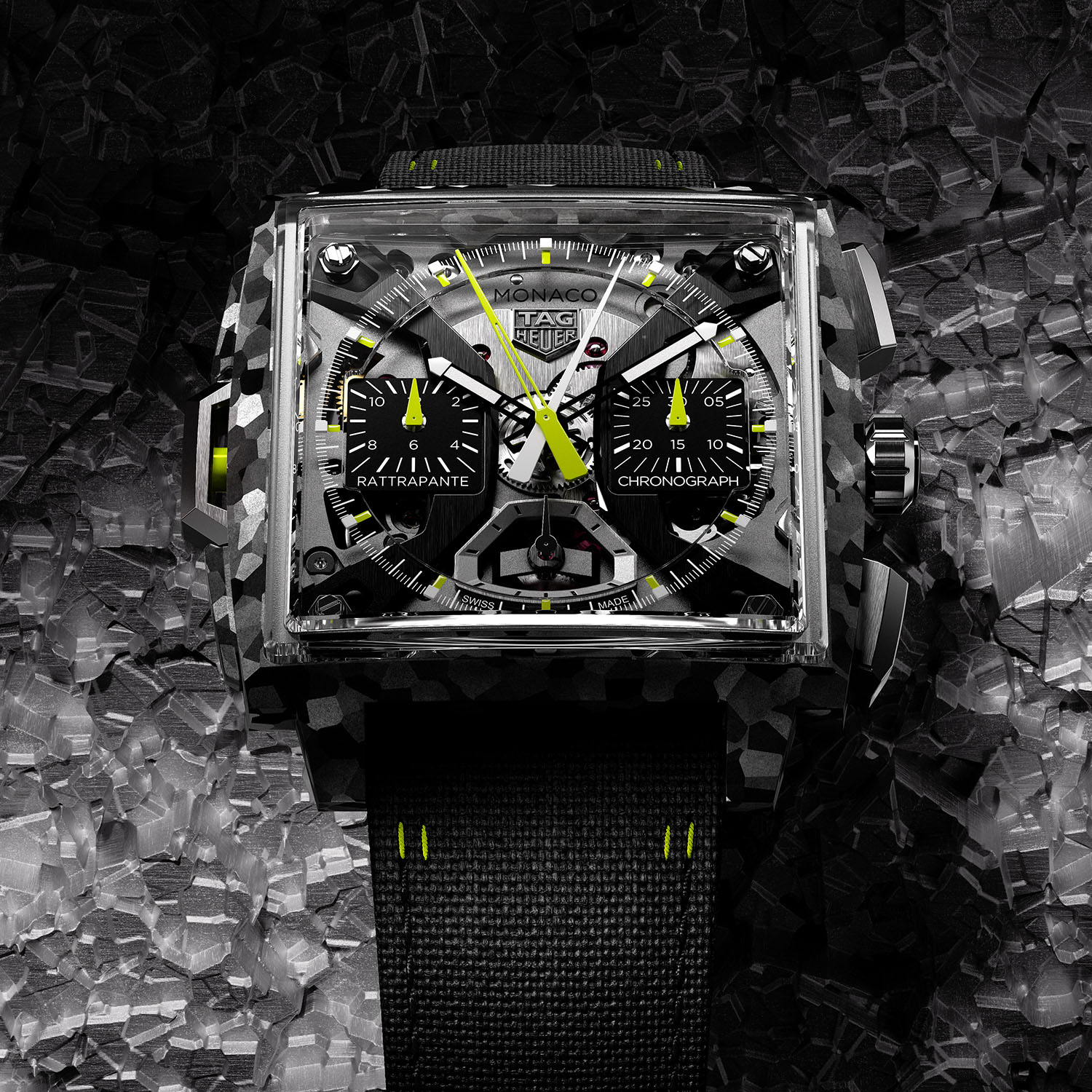
The TAG Heuer Monaco has never been a watch that disappears quietly on the wrist.
Its square case, motorsport history and instantly recognisable dial architecture make it one of the easiest luxury chronographs to identify from across a room.
That also means small inaccuracies can become surprisingly obvious when evaluating a replica TAG Heuer Monaco TH20-11.
The latest TH20-11 generation gives collectors a particularly useful reference point.
The genuine Monaco combines a 39mm Grade 5 titanium case with a modern automatic chronograph movement, while retaining the visual character that has defined the Monaco for decades.
For anyone comparing different versions, the real question is therefore not simply whether a watch looks similar in photographs, but how accurately its proportions, dial construction, case finishing and chronograph layout reproduce the design.
This guide explains the details worth examining before describing any Monaco TH20-11-style watch as a convincing 1:1 replica.
Understanding the Genuine TAG Heuer Monaco TH20-11
Before judging a replica, it helps to establish a clear benchmark.
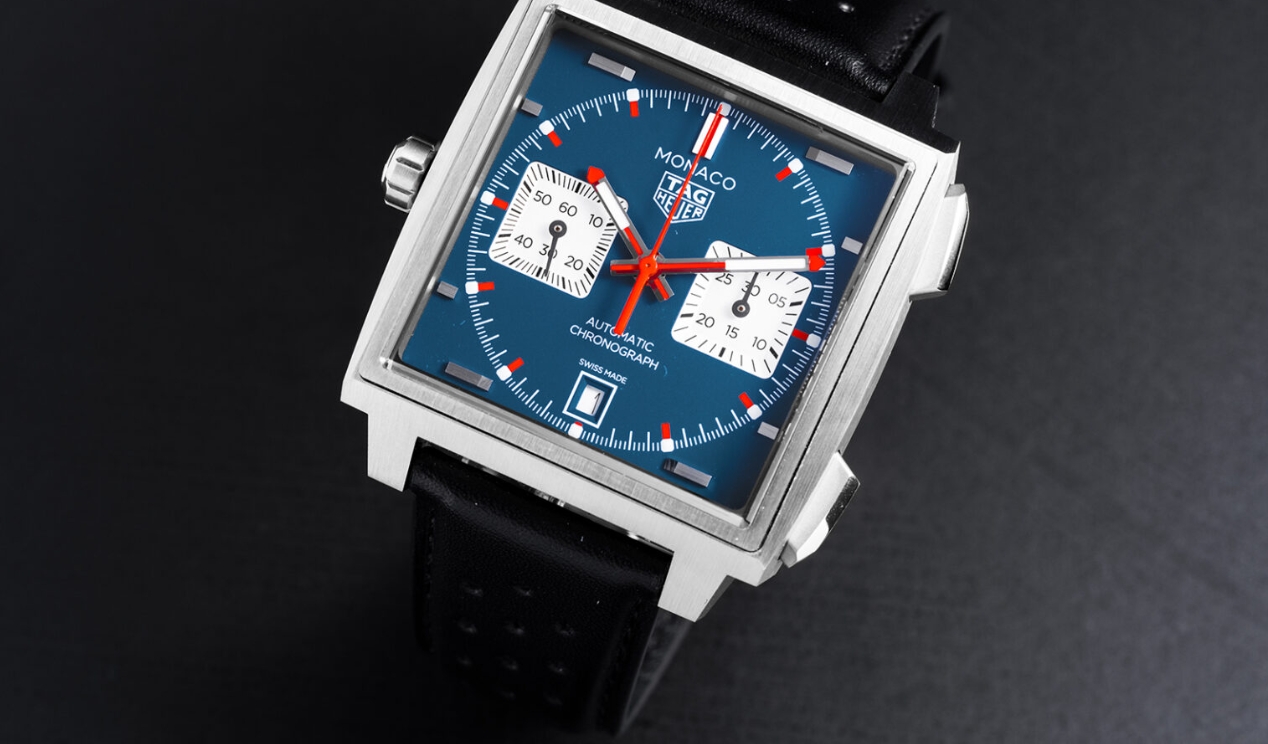
The current TAG Heuer Monaco TH20-11 uses a square 39mm case made from Grade 5 titanium.
The genuine case measures approximately 13.9mm thick and combines fine-brushed, polished and sand-blasted surfaces rather than relying on one uniform finish.
Inside is TAG Heuer’s automatic Calibre TH20-11.
The movement operates at 28,800 vibrations per hour and offers an approximately 80-hour power reserve with bidirectional winding.
The movement can also be viewed through a sapphire exhibition caseback.
Those specifications matter because a convincing Monaco replica is not defined by a logo alone.
The relationship between case size, thickness, dial spacing and movement layout determines whether the watch looks balanced when viewed from different angles.
1. Case Geometry Is the First Detail to Examine
The Monaco’s square case is unforgiving.
On a conventional round watch, a slightly incorrect bezel width or lug profile can sometimes go unnoticed.
On the Monaco, every straight edge provides another visual reference point.
Look closely at the transition between the upper case surface, the vertical sides and the short integrated lugs.
A better-executed replica should preserve the compact square stance of the original rather than appearing unusually wide, thick or slab-sided.
Case thickness is particularly important.
A replica may look accurate in a straight-on photograph yet lose much of the Monaco character when viewed from the side if its mid-case, crystal or caseback is excessively tall.
2. Titanium Colour and Surface Finishing Matter
The genuine TH20-11 generation uses Grade 5 titanium, giving the case a different visual character from ordinary polished stainless steel.
It should not simply resemble a bright mirror-finished steel case.
More importantly, the original combines several surface treatments.
Brushed areas, polished edges and more muted sections create contrast as light moves across the angular case.
For that reason, one of the easiest ways to distinguish a more carefully produced replica from a basic copy is to inspect how consistently those transitions are executed.
Poorly defined brushing, rounded edges or excessively glossy surfaces can change the character of the entire watch.
3. The Dial Should Be Judged as a Complete Layout
Collectors often concentrate first on the TAG Heuer logo, but the overall dial architecture usually reveals more.
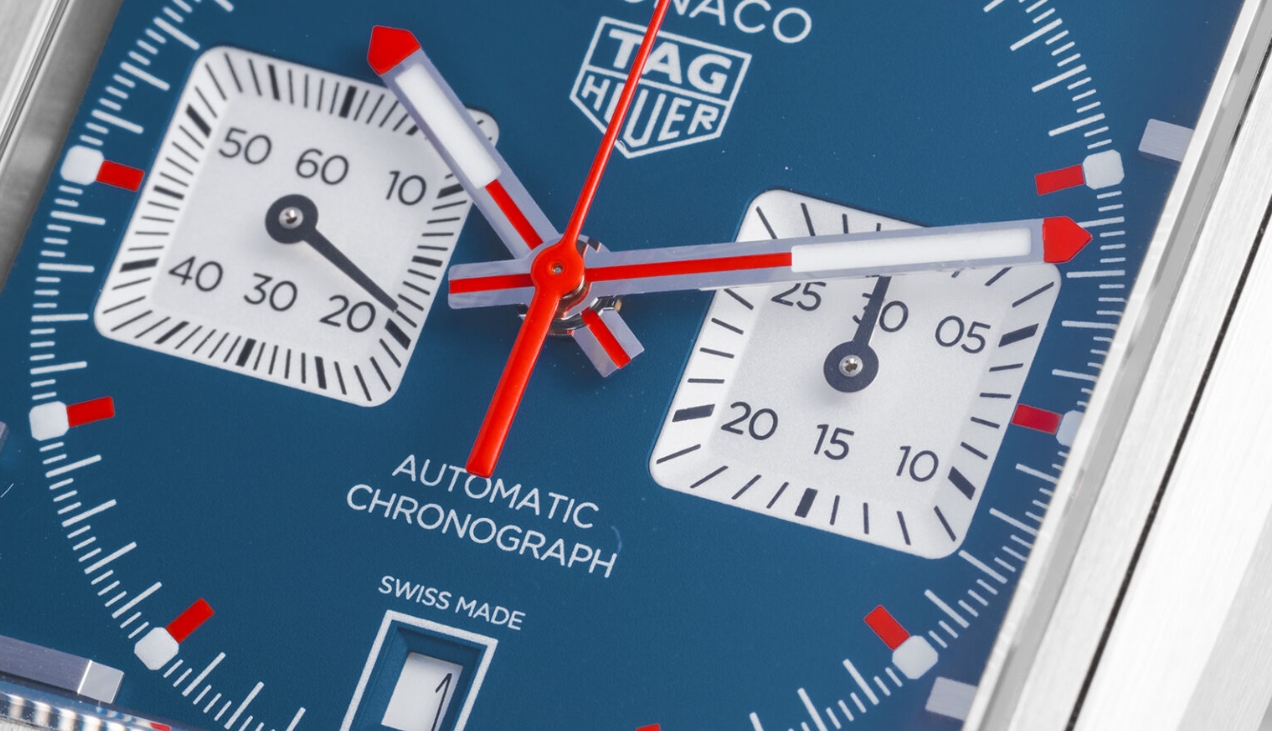
The spacing between the two chronograph counters, the central hands, hour markers, minute track and date display must all work together.
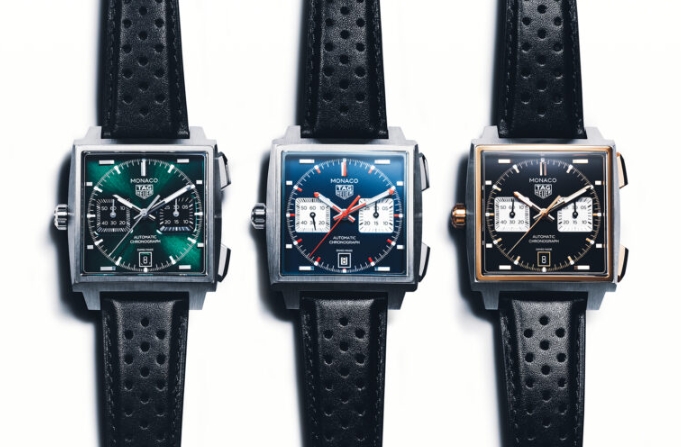
On the blue TH20-11 version, the blue opaline dial is paired with contrasting silver counters and red details.
The green reference uses a lacquered sunray-brushed green dial with darker counters.
Regardless of colour, the dial should retain the clean geometric balance associated with the Monaco.
When comparing photographs, check:
- the size and position of both chronograph counters;
- the length and thickness of the hour and minute hands;
- the alignment of applied hour markers;
- the position of the date aperture at 6 o’clock;
- the typography of the dial printing;
- the amount of empty space between individual elements.
An inaccurate dial can contain all the correct components while still looking wrong because the spacing between them is slightly different.
4. Printing Quality Is More Important Than Keyword Claims
Terms such as “AAA,” “super clone” and “1:1” are commonly used descriptions, but they do not provide a measurable standard of quality.
The watch itself provides much better evidence.
High-resolution photographs should reveal whether the dial printing is sharp, whether lettering is properly centred and whether small markings remain consistent around the minute track.
Blurred printing, uneven spacing or oversized text can become much more visible on the relatively compact Monaco dial.
This is why detailed comparison is more useful than relying on a quality label in a product description.
5. Pay Attention to the Chronograph Hands and Counters
The Monaco is fundamentally a chronograph, so the chronograph layout should be treated as a major accuracy test rather than a decorative detail.
Check the resting position of the central chronograph seconds hand and examine whether the counter hands sit cleanly on their zero positions.
The proportions of the counters should also be compared with reference photographs rather than judged independently.
Very small differences in counter diameter or placement can make the centre of the dial appear either too crowded or too empty.
6. The Crystal Changes the Entire Appearance of the Watch
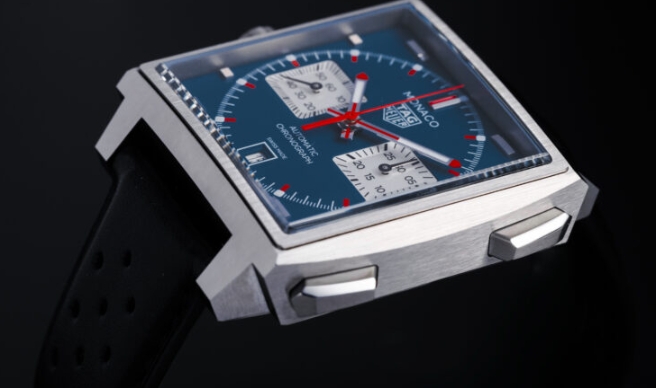
The Monaco’s crystal and case geometry work together to produce its distinctive profile.
A poorly shaped crystal can therefore change the watch even when the dial beneath it is reasonably accurate.
Examine the watch from a three-quarter angle rather than relying exclusively on front-facing images.
The height of the crystal, its relationship with the case and the distortion visible near its edges are useful details when comparing different executions.
7. Caseback Accuracy Deserves More Attention
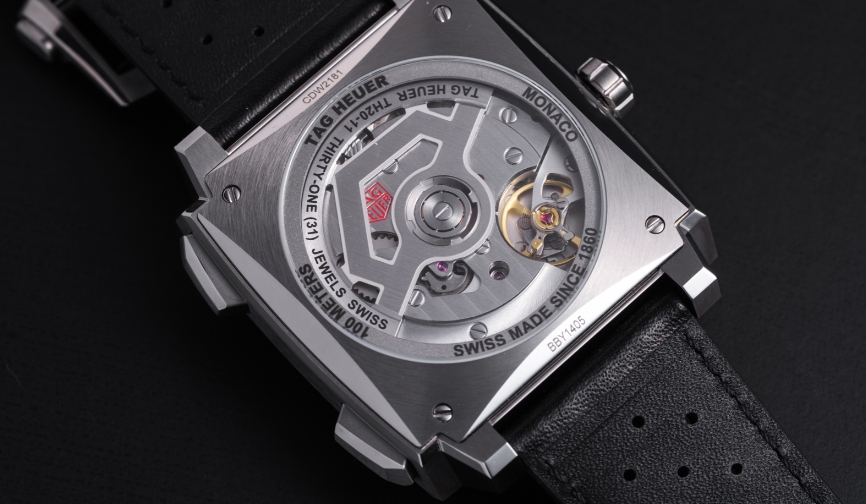
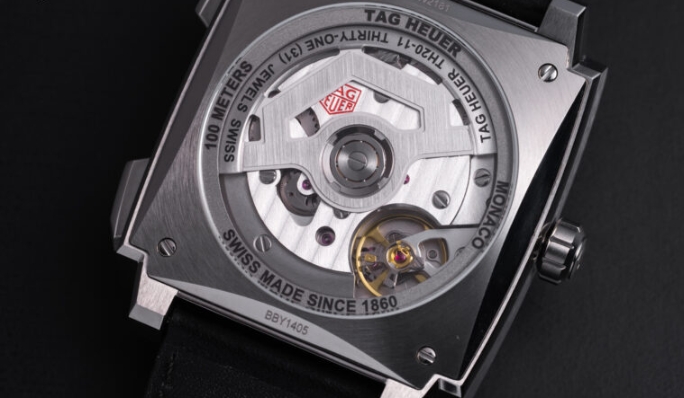
The genuine TH20-11 uses a sapphire exhibition caseback that makes the movement part of the visual design.
That creates another area where differences may become obvious.
A replica movement does not become mechanically equivalent to TAG Heuer’s in-house TH20-11 simply because its rotor or bridges have been decorated to look similar.
Movement architecture, winding construction, chronograph mechanism and power reserve are separate technical questions.
For visual comparison, inspect the rotor shape, bridge layout, engraving placement and finishing through the caseback.
For mechanical claims, independent testing is more meaningful than appearance alone.
8. Strap and Clasp Details Complete the Monaco Look
The current titanium Monaco references are paired with black perforated calfskin straps, reinforcing the model’s motorsport character.
The genuine watch also uses titanium hardware that visually complements the case.
A good strap should therefore do more than match the colour.
Perforation spacing, stitching, taper, leather texture and clasp proportions all influence how convincing the complete watch appears.
This area is sometimes overlooked because straps are relatively easy to replace, but an inaccurate clasp or unusually thick leather strap can alter the way the Monaco sits on the wrist.
9. Do Not Assume Water Resistance From Appearance
The genuine TAG Heuer Monaco TH20-11 is rated to 100 metres of water resistance.
That specification should not automatically be assumed for a replica simply because its caseback or marketing material displays a similar rating.
Actual water resistance depends on seals, assembly tolerances, crown construction and pressure testing.
Without an independent pressure test, the safest approach is to treat any stated resistance as an unverified specification.
10. What Actually Defines a High-Quality Monaco Replica?
A convincing Monaco TH20-11-style replica is best judged as the sum of many small details rather than by one headline specification.
The strongest examples should show consistent proportions, crisp dial printing, correctly positioned counters, carefully executed case surfaces, convincing titanium-like colour and a well-proportioned strap and clasp.
Just as importantly, photographs should remain convincing from the side and rear rather than only from a carefully selected front angle.
Readers exploring other models can browse the
TAG Heuer Monaco articles and comparisons for a broader look at how different Monaco generations approach case materials, dial layouts and movement architecture.
Replica Monaco TH20-11 Accuracy Checklist
| Area | Reference Detail | What to Check |
|---|---|---|
| Case | 39mm square profile | Width, thickness and edge geometry |
| Material | Grade 5 titanium | Colour and mixed surface finishing |
| Dial | Two-counter chronograph layout | Spacing, alignment and printing |
| Date | Positioned at 6 o’clock | Window size, angle and centring |
| Crystal | Sapphire | Profile and edge distortion |
| Caseback | Sapphire display back | Movement layout and decoration |
| Strap | Perforated calfskin | Texture, taper and clasp proportions |
| Movement Reference | TH20-11, 4Hz, 80-hour reserve | Do not assume visual similarity equals mechanical equivalence |
Frequently Asked Questions
What size is the TAG Heuer Monaco TH20-11?
The genuine current-generation Monaco TH20-11 uses a 39mm case and measures approximately 13.9mm thick.
Those proportions provide a useful starting point when comparing visually similar best replica TAG Heuer watches.
Does the genuine Monaco TH20-11 use titanium?
Yes. Current TH20-11 Monaco references include Grade 5 titanium cases, with different brushed, polished and sand-blasted surfaces contributing to the appearance of the watch.
What movement is used in the genuine Monaco TH20-11?
TAG Heuer uses its automatic Calibre TH20-11, which operates at 4Hz and provides an approximately 80-hour power reserve.
It also incorporates bidirectional automatic winding.
Can a replica movement be identical to the genuine TH20-11?
Visual decoration and mechanical construction should be evaluated separately.
A movement may be designed to resemble the appearance of the original through an exhibition caseback without reproducing the same internal architecture, chronograph system or performance characteristics.
What is the easiest Monaco replica detail to compare?
Start with overall case proportions and dial spacing.
Because the Monaco uses a highly recognisable square case and symmetrical chronograph layout, proportion errors tend to be easier to notice than on many conventional round watches.
Final Thoughts
The cheap replica TAG Heuer Monaco TH20-11 is an interesting model to analyse because its design leaves relatively little room for inaccurate proportions.
The square titanium case, twin-counter dial and exhibition caseback create several separate areas where construction quality can be evaluated.
Rather than relying on labels such as “perfect,” “AAA” or “1:1,” compare measurable and visible details.
Case geometry, dial spacing, printing, finishing and movement presentation provide far more useful information about how accurately a watch has been executed.
For additional TAG Heuer model guides and technical comparisons, visit the TGWatch TAG Heuer watch guide.